
BrowserLeaks Pricing: Free Tools vs Paid API Plans
BrowserLeaks Pricing: What It Costs and What You Can Get for Free
If you are searching for BrowserLeaks pricing, you are likely trying to figure out whether the platform costs money, what a paid plan includes, and whether a free alternative can do the job. The short answer is that BrowserLeaks exists in two different forms: the long-running BrowserLeaks.com suite of free web-based privacy tests, and a newer open-source project called BrowserLeaks.io that has published planned subscription and API pricing on GitHub. Understanding the difference matters because you may be comparing a free diagnostic tool with a not-yet-launched commercial service.
This guide breaks down the actual and planned costs, what each tier includes, and how to evaluate whether paying for browser privacy testing makes sense for your use case. It also covers free alternatives such as BrowserScan so you can make an informed decision without overspending.
What Is BrowserLeaks?
BrowserLeaks Pricing: Free Tools vs Paid API Plans - What Is BrowserLeaks?.
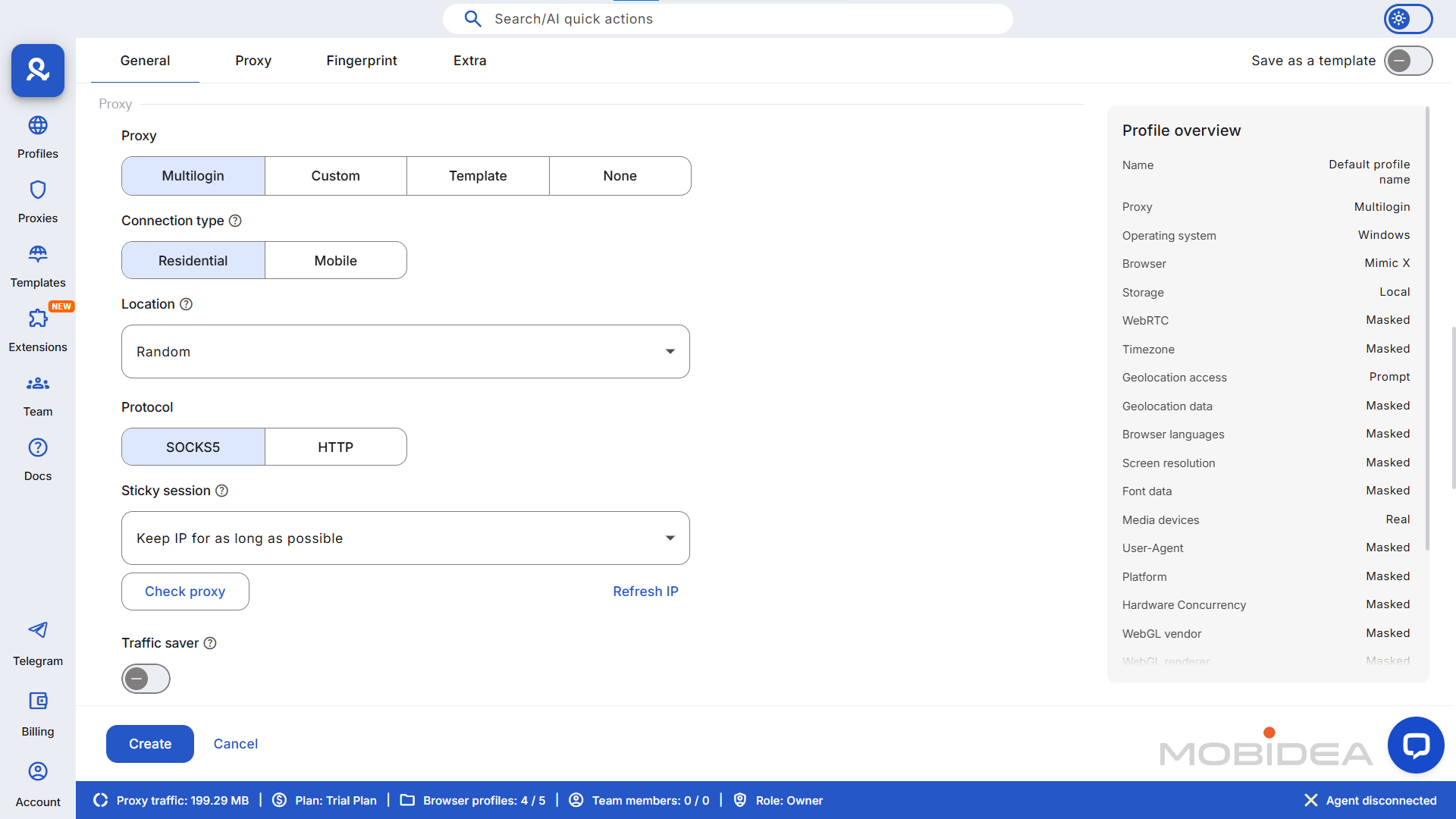
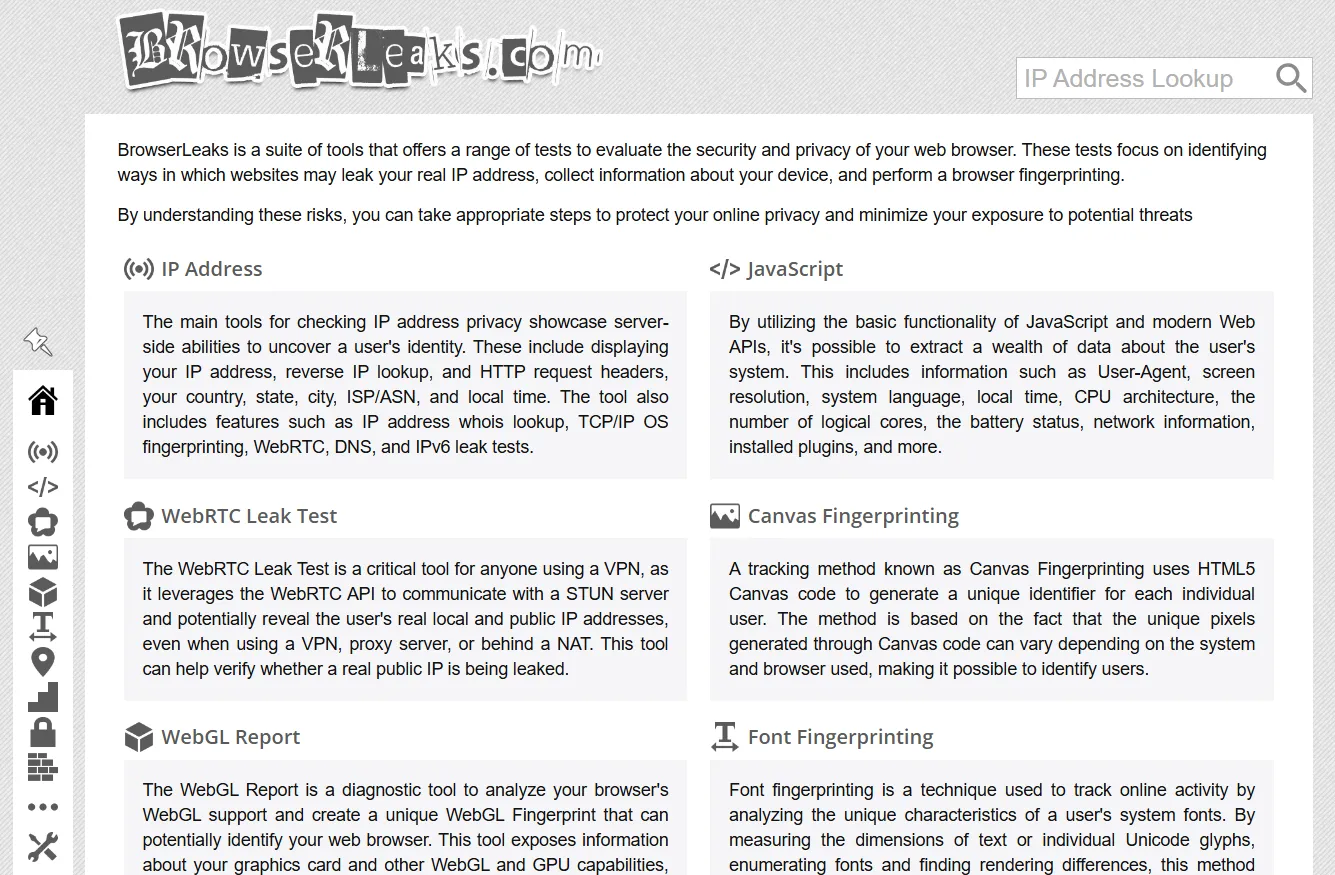
BrowserLeaks is best known as a free online service that reveals what your browser exposes to websites. It runs a series of checks directly in your browser, including:
- IP address detection with geolocation, ISP, and time zone details
- WebRTC leak tests that attempt to uncover your real IP even when a VPN is active
- DNS leak tests that show which DNS servers resolve your requests
- Canvas and font fingerprinting analysis that identifies unique browser characteristics
- SSL/TLS and HTTP/2 fingerprinting that can be used for tracking
The original BrowserLeaks.com has historically provided these checks at no cost. It is a diagnostic utility, not a subscription product. That is why many users searching for pricing find little to buy: the core service is free.
A separate project, BrowserLeaks.io, is an open-source "next-generation" privacy detection platform under active development. Its GitHub repository outlines a more ambitious commercial roadmap, including subscription tiers and a RESTful API. That roadmap is the source of most concrete pricing figures currently associated with the BrowserLeaks name.
BrowserLeaks.com: Free Core Testing
BrowserLeaks Pricing: Free Tools vs Paid API Plans - BrowserLeaks.com: Free Core Testing.
The established BrowserLeaks.com service does not publish a pricing page because its primary tools are free to use. You can visit the site and run IP, WebRTC, DNS, fingerprint, and connection security tests without creating an account or entering payment details.
This free model is common among privacy diagnostic tools. The value comes from immediate, browser-based feedback rather than a gated product. For individual users checking a VPN connection or verifying a browser configuration, the free tier is usually sufficient.
What you do not get with the free web tools:
- Automated or scheduled scans
- Historical tracking of results over time
- Exportable reports in PDF or JSON format
- Programmatic API access for integration into your own applications
- Batch testing across many browser profiles
Those capabilities are where paid or self-hosted options enter the picture.
BrowserLeaks.io: Planned Pricing and API Tiers

BrowserLeaks Pricing: Free Tools vs Paid API Plans - BrowserLeaks.io: Planned Pricing and API Tiers.
The open-source BrowserLeaks.io project has published a detailed roadmap that includes subscription pricing. Because the platform is still in development, these figures represent planned pricing rather than currently available plans. They are useful for understanding the direction of the project and for comparing against existing commercial alternatives.
Planned Free Tier
The free tier is designed for individual users who need occasional checks. According to the project roadmap, it includes:
- 100 API requests per day
- Basic detection features
- Core leak tests such as IP, DNS, and WebRTC
This mirrors the free access model of the original BrowserLeaks.com but adds a limited API allowance for developers who want to experiment.
Planned Pro Tier
The Pro tier is aimed at privacy-conscious users who want persistent history and reporting. The published target price is $9.99 per month, and it is expected to include:
- Unlimited history tracking
- Cloud synchronization across devices
- PDF report exports
- Advanced detection tests as they become available
For individuals or small teams that regularly audit browser configurations, this tier offers convenience features rather than fundamentally different detection capabilities.
Planned API Tiers
The API tiers target developers and enterprises that need programmatic access to leak detection. Two published tiers are:
| Tier | Monthly Price | API Requests |
|---|---|---|
| API Starter | $29 | 10,000 |
| API Pro | $99 | 100,000 |
An Enterprise tier with custom pricing and private deployment is also planned. These prices are in line with other developer-focused privacy and IP intelligence APIs, though actual value depends on response quality, uptime, and documentation once the service launches.
What the Paid Tiers Do Not Change
The BrowserLeaks.io project states a privacy commitment that applies across all tiers: detection runs in the browser, fingerprints are not stored, and no third-party analytics or trackers are used. If that commitment holds, paying for a subscription buys convenience and API access, not a different privacy posture.
How BrowserLeaks Pricing Compares to Alternatives
BrowserLeaks Pricing: Free Tools vs Paid API Plans - How BrowserLeaks Pricing Compares to Alternatives.
If you are evaluating whether to pay for browser privacy testing, it helps to compare the landscape:
| Option | Cost | Best For |
|---|---|---|
| BrowserLeaks.com | Free | One-off manual leak checks |
| BrowserLeaks.io Free (planned) | Free | Individual users, limited API testing |
| BrowserLeaks.io Pro (planned) | $9.99/month | History, cloud sync, PDF reports |
| BrowserLeaks.io API Starter (planned) | $29/month | Small development projects |
| BrowserLeaks.io API Pro (planned) | $99/month | Higher-volume integrations |
| BrowserScan | Free | Comprehensive fingerprint and leak testing without installation |
| Self-hosted open-source tools | Free (your infrastructure) | Full control, technical users |
For most individuals, free tools cover the core need: running a leak test and interpreting the results. Paid tiers become relevant when you need automation, history, or API integration at scale.
Free Alternative: BrowserScan
If your goal is thorough browser privacy testing without a subscription, BrowserScan offers a comparable suite of free, browser-based diagnostics. It is a practical option whether you are checking a VPN for leaks, validating an antidetect browser profile, or auditing your network exposure.
BrowserScan includes:
- Browser fingerprint analysis to verify how unique or authentic your fingerprint appears
- DNS and WebRTC leak tests to confirm your VPN is not exposing your real IP
- IP address lookup with geolocation, ISP, and proxy detection
- Port scanning powered by Nmap to identify open vulnerabilities
- Internet speed testing and a user agent parser for debugging
Because everything runs in the browser, there is no installation and no account required. This matches the free access model of BrowserLeaks.com while adding fingerprint verification and network scanning tools in one place. For a step-by-step walkthrough, see the BrowserScan tutorial on checking fingerprints and leaks.
If you are testing whether a VPN is actually protecting your connection, combining a leak test with a broader understanding of what a personal VPN does helps you interpret the results correctly. A clean DNS test means little if your WebRTC configuration still exposes your local IP.
What Should You Actually Pay For?
Pricing decisions come down to your use case:
Individual privacy checks
You probably do not need to pay. Free tools such as BrowserLeaks.com and BrowserScan cover IP, DNS, WebRTC, and fingerprint checks. Run them before and after changing VPN servers or browser settings, and you will catch most common leaks.
Regular audits and documentation
If you need to document privacy posture over time, a paid plan with history and PDF exports has value. The planned $9.99/month Pro tier would suit this, but until it launches, you can replicate much of it by saving screenshots or exporting results manually from free tools.
Developer integration
If you are building an application that needs programmatic leak detection, an API tier is the practical choice. The planned $29/month starter tier is reasonable for prototyping, while the $99/month tier suits production workloads. Before committing, compare against existing IP intelligence APIs and consider whether self-hosting an open-source tool gives you more control at lower cost.
Enterprise and compliance
Organizations with compliance requirements may need private deployment, custom SLAs, and batch testing. Enterprise pricing is custom by nature, so budget discussions should start with your specific volume and security requirements rather than a published price.
Related reading
- What Is a Personal VPN? How to Choose and Test One - Learn what a personal VPN does, how it protects your IP and traffic, how to choose the right service, and how to verify your connection for leaks.
- How to Use Nmap: The Network Mapper Free Security Scanner - Learn how to use Nmap, the free open-source network mapper, for port scanning, host discovery, OS detection, and security auditing with practical examples.
- Online Anonymity: What It Really Means and How to Test Yours - Learn what online anonymity really means, why it matters, the tools people use to achieve it, and how to test whether your identity is actually protected.
Sources and further reading
- GitHub - residentialproxies/browserleaks.io: Next-generation browser privacy detection platform - Next-generation browser privacy detection platform - residentialproxies/browserleaks.io
- BrowserLeaks.com: anonymity check with Undetectable - We check the browser for IP and WebRTC leaks, DNS resolution and fingerprint on BrowserLeaks. How the anti-detect browser Undetectable.io helps pass the tests.
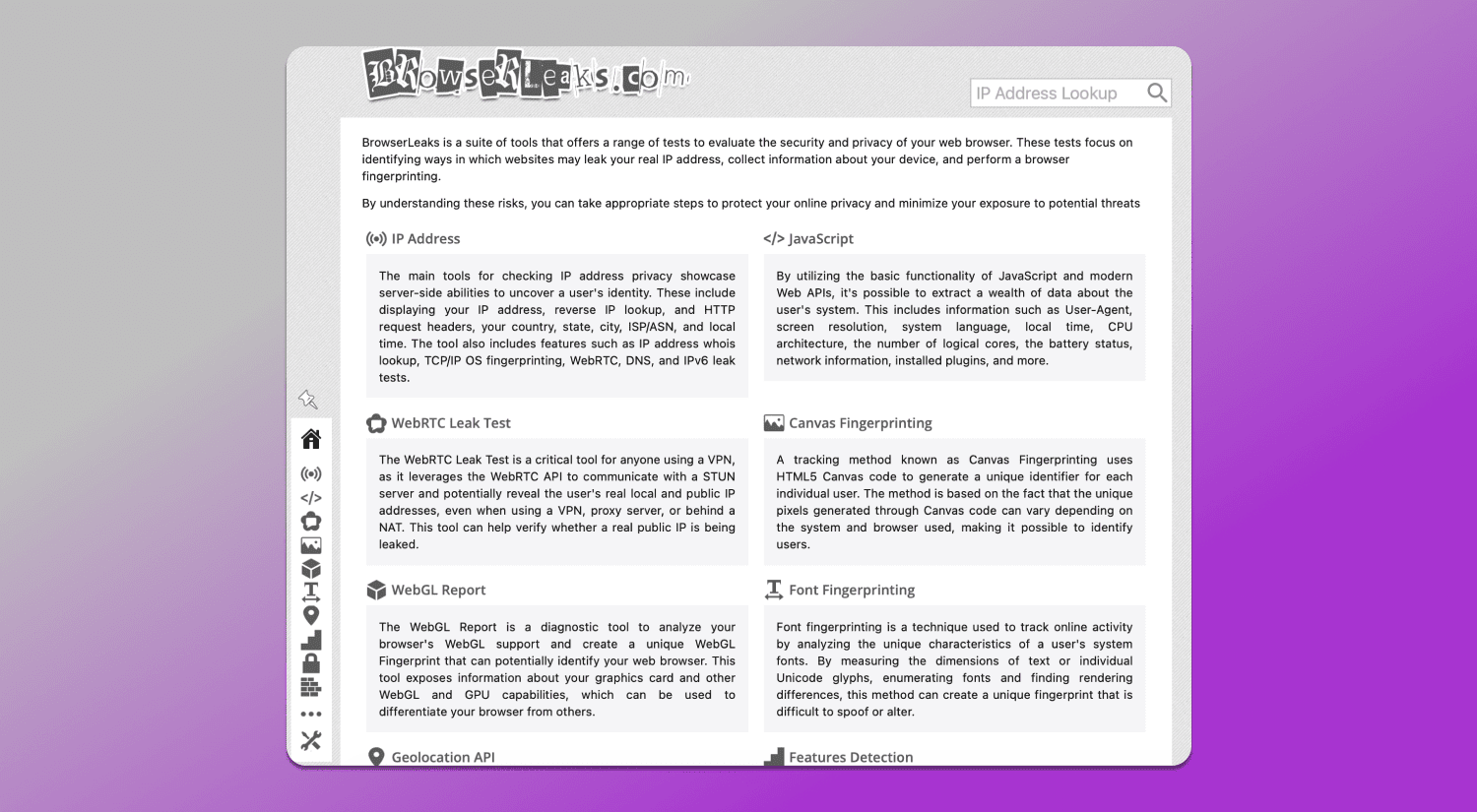
- Browserleaks & Browser Profiles – Keep Accounts Undetected - Explore browserleaks and its benefits. 🔍 See how Multilogin browser profiles protect your detection. Start today from $2!
Frequently Asked Questions
Is BrowserLeaks free?
The original BrowserLeaks.com suite of web-based privacy tests is free to use. The newer BrowserLeaks.io project plans a free tier with 100 API requests per day, alongside paid Pro and API subscriptions.
How much does the BrowserLeaks API cost?
Planned API pricing for BrowserLeaks.io is $29 per month for 10,000 requests and $99 per month for 100,000 requests. Enterprise pricing would be custom. These figures come from the project's public roadmap and are not yet live.
Does BrowserLeaks.com have a paid version?
BrowserLeaks.com does not currently advertise a paid version. Its diagnostic tests are accessible without payment. Paid features such as history, exports, and API access are part of the separate BrowserLeaks.io roadmap.
Can I test for DNS and WebRTC leaks for free?
Yes. Both BrowserLeaks.com and BrowserScan offer free DNS and WebRTC leak tests that run directly in your browser. No account or payment is required.
What is the difference between BrowserLeaks.com and BrowserLeaks.io?
BrowserLeaks.com is an established free privacy testing site. BrowserLeaks.io is an open-source project building a next-generation platform with additional tests, a privacy score, history tracking, and a planned commercial API. The two are separate efforts.
Is a paid plan necessary to detect browser fingerprinting?
No. Free tools can detect canvas, font, WebGL, and other fingerprinting signals. Paid plans add convenience features such as history and exports, but the underlying detection is available without cost.
Conclusion
BrowserLeaks pricing is simpler than it first appears. The core testing experience is free, whether you use the established BrowserLeaks.com tools or a free alternative like BrowserScan. The only concrete prices associated with the BrowserLeaks name come from the BrowserLeaks.io open-source roadmap: a $9.99/month Pro tier, $29 and $99 API tiers, and custom enterprise pricing.
For most users, the right decision is to start with free tools, run regular leak checks, and only consider a paid plan when you need automation, persistent history, or API access. If you want a comprehensive free option that combines fingerprint analysis, leak testing, and network scanning, BrowserScan covers the same ground without a subscription. Understanding online anonymity and testing it regularly matters more than which specific tool you use.