
DeviceAtlas Review: Device Intelligence for 2026
DeviceAtlas Review: Device Intelligence for 2026
DeviceAtlas is a device intelligence platform that identifies connected devices in real time using HTTP headers, device authentication, and other signals. This review examines its capabilities, ideal users, use cases, strengths, limitations, pricing signals, setup considerations, and decision criteria so you can judge whether it fits your stack.
What DeviceAtlas Does
First viewport screenshot of DeviceAtlas - Device Intelligence.
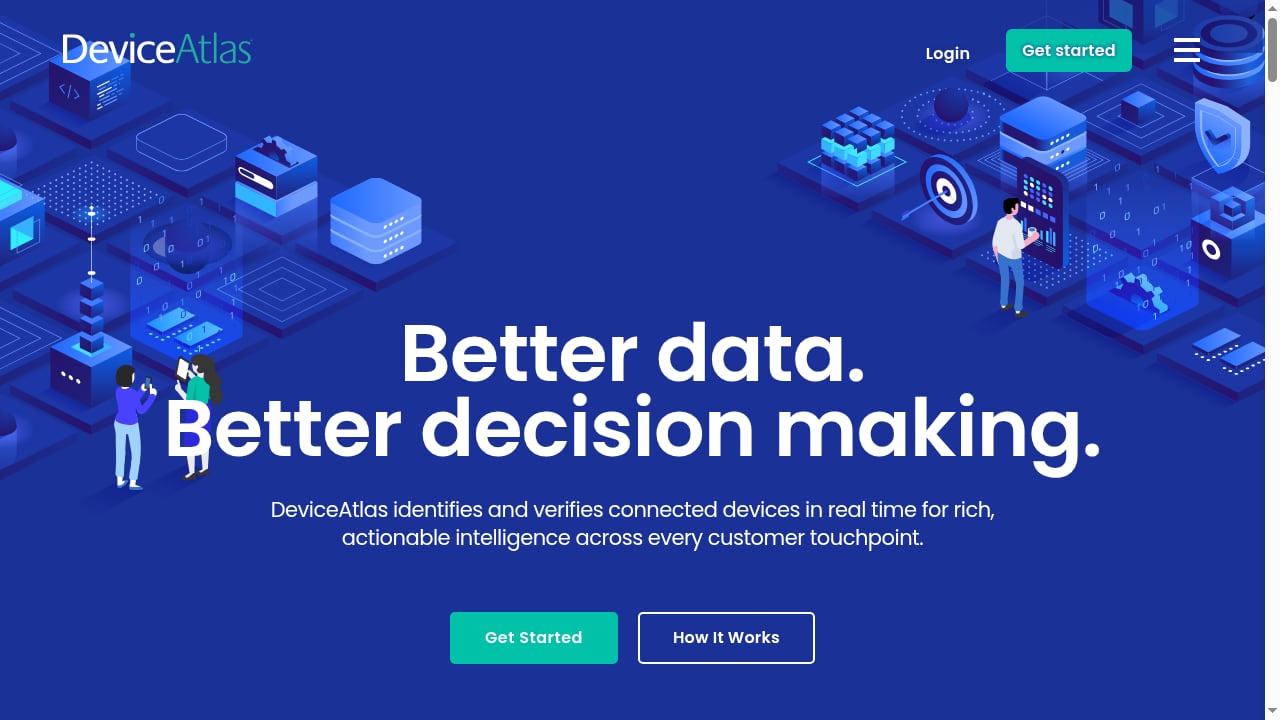
DeviceAtlas analyzes incoming requests to determine device type, model, operating system, browser, and over 220 other capabilities and data points. It detects user-agent spoofing and identifies bots, helping businesses tailor content, segment users, prevent fraud, and improve analytics. The platform is available as a cloud license (Starter, Professional, Enterprise) or for local deployment (Enterprise/OEM).
Ideal Users
DeviceAtlas is built for organizations that need reliable device awareness at scale. Typical users include:
- AdTech and programmatic advertising teams that need accurate device targeting and fraud prevention.
- eCommerce and web optimization teams that tailor layouts, images, and checkout flows by device capability.
- Streaming and gaming platforms that optimize media delivery and detect anomalous devices.
- Analytics and data teams that enrich event data with device context.
- Security and risk teams that use device authentication and bot detection to flag suspicious traffic.
Smaller teams may find the Starter cloud license sufficient, while large enterprises with strict data residency or latency requirements may prefer local deployment.
Key Use Cases
First viewport screenshot of Case Studies.
User segmentation and content tailoring
DeviceAtlas exposes device capabilities such as screen size, memory, and supported formats. You can use these signals to serve appropriate images, adjust layouts, or gate features that require specific hardware.
Fraud prevention and bot detection
By combining device authentication with UA spoofing detection, DeviceAtlas can flag requests where the claimed device does not match observed characteristics. This is valuable for ad fraud prevention, account takeover detection, and traffic quality analysis.
Analytics enrichment
Device-level data improves attribution and reporting. Teams can segment analytics by device model, OS version, or capability to understand performance differences and optimize accordingly.
Streaming and gaming optimization
Streaming services can use device data to select bitrates and codecs, while gaming platforms can detect unsupported devices or anomalous clients.
Strengths
- Broad device coverage: Tracks over 220 capabilities and data points, with a database that has historically been updated frequently (early reviews noted daily updates and user-contributed data Source 3).
- Multiple detection methods: HTTP header analysis, device authentication, UA spoofing detection, and bot identification provide layered accuracy.
- Flexible deployment: Cloud licenses scale from Starter to Enterprise, while local deployment suits organizations with data residency or latency needs.
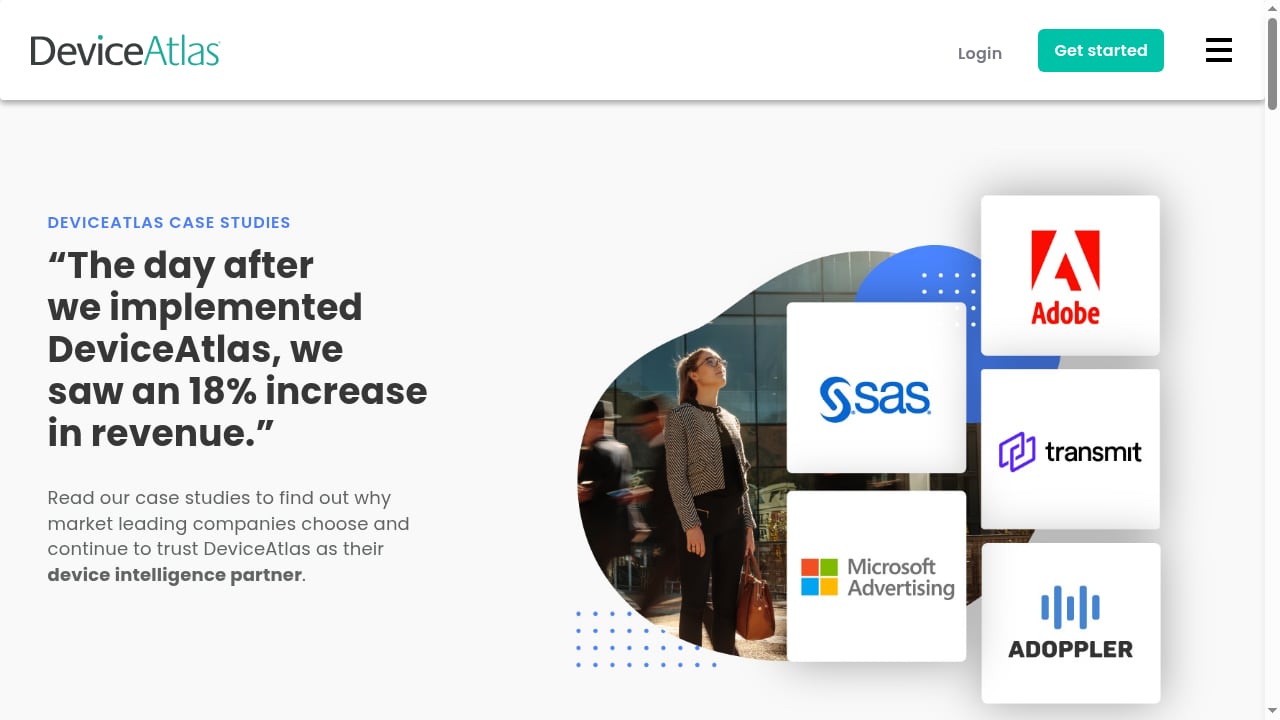
- Proven enterprise adoption: Trusted by companies such as Adjust, Adobe, Adoppler, DynAdmic, Equativ, Everflow, and Fospha.
- Actionable data: Device properties are exposed in a structured way that supports real-time decisioning, not just reporting.
Limitations
- Pricing transparency: DeviceAtlas does not publish detailed pricing; you must contact sales for quotes. Budgeting requires direct engagement.
- Complexity for small teams: The full capability set may be overkill for simple websites that only need basic responsive design.
- Integration effort: While APIs and libraries exist, extracting full value requires engineering work to map device properties to business logic.
- Historical context: Much of the publicly available review content is dated (e.g., a 2008 Data Explorer review Source 2), so current capabilities should be verified directly with the vendor.
- Employee reviews are limited: Glassdoor data shows a small sample size (6 ratings) and is not a reliable indicator of product quality Source 1.
Pricing Signals
First viewport screenshot of Compare DeviceAtlas Licenses.
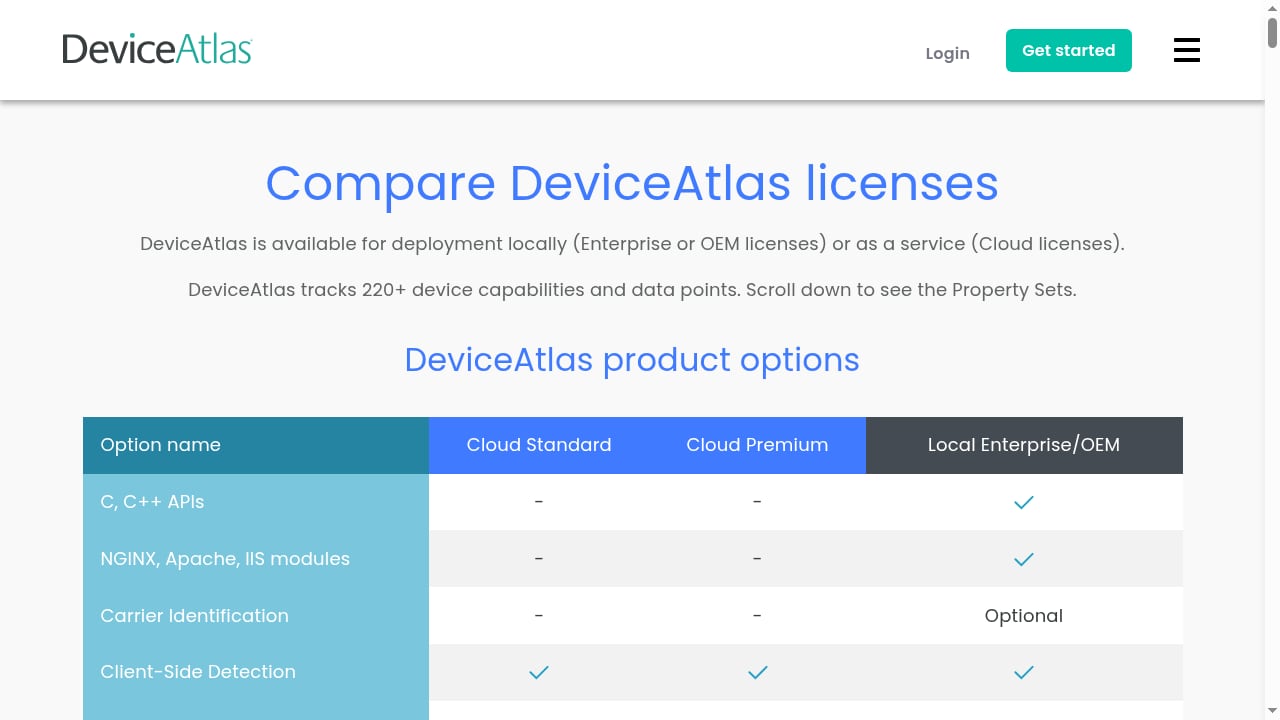
DeviceAtlas offers cloud licenses at Starter, Professional, and Enterprise tiers, plus local deployment for Enterprise/OEM. Public pricing is not listed. Historical sources describe a basic license as affordable and mention a one-year personal evaluation option Source 3. For current pricing, request a quote and clarify:
- Request volume and overage fees
- Data refresh frequency
- Support and SLA terms
- Local deployment costs and licensing
Setup and Integration
DeviceAtlas typically integrates via API or on-premises libraries. A practical setup sequence:
- Define your use cases (e.g., content tailoring, fraud detection) and the device properties you need.
- Choose deployment mode based on latency, data residency, and scale.
- Integrate the API or library into your request pipeline.
- Map device properties to business rules (e.g., serve WebP only to supported devices).
- Test with real traffic and monitor detection accuracy.
- Iterate using analytics on device segments.
For teams also concerned with client-side privacy and fingerprinting, tools like BrowserScan's fingerprint detection tool can complement server-side device intelligence by revealing what browsers expose. If you are evaluating multiple privacy checkers, see our comparison of BrowserScan, PrivacyTestLab, and ToDetect.
Decision Criteria
Consider DeviceAtlas if:
- You need granular device data beyond basic user-agent parsing.
- Fraud prevention or bot detection is a priority.
- You require local deployment or enterprise-scale SLAs.
- You can invest engineering time in integration.
Look elsewhere if:
- You only need simple responsive design.
- Budget is tight and you need published, low-cost pricing.
- You lack engineering resources for integration.
DeviceAtlas vs Alternative Approaches
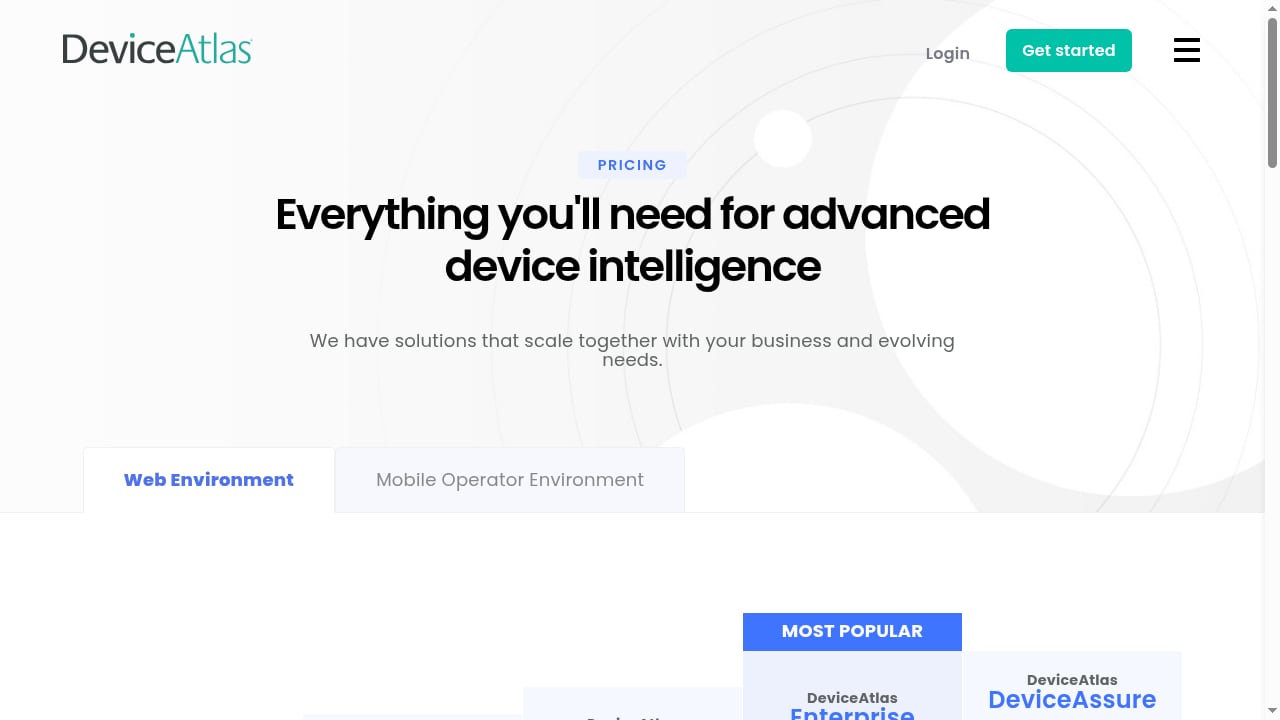
First viewport screenshot of Pricing.
| Approach | Strengths | Weaknesses |
|---|---|---|
| DeviceAtlas | Rich device data, fraud detection, flexible deployment | Opaque pricing, integration effort |
| Basic UA parsing | Free, simple | Easily spoofed, limited capabilities |
| Client-side fingerprinting | Captures browser-level signals | Privacy concerns, less reliable for fraud |
For a broader view of privacy and fingerprint testing tools, see our Top 10 Browser Privacy & Fingerprint Testing Tools 2026.
Related reading
- BrowserScan Fingerprint Detection Tool Tutorial: Enhancing Privacy and Security with AdsPower - Learn how to use the BrowserScan fingerprint detection tool and combine it with the AdsPower fingerprint browser to optimize browser fingerprints, prevent association, and enhance online privacy and security. Includes setup steps, practical examples, and FAQ.
FAQ
Is DeviceAtlas free?
No. DeviceAtlas is a commercial platform with cloud licenses (Starter, Professional, Enterprise) and local deployment options. A free trial or evaluation may be available; contact the vendor.
What is DeviceAtlas used for?
It is used for device detection, user segmentation, content tailoring, analytics enrichment, fraud prevention, and bot detection.
How accurate is DeviceAtlas?
Accuracy depends on deployment and data freshness. It combines multiple signals (HTTP headers, device authentication) to improve detection and flag spoofing.
Does DeviceAtlas work for mobile apps?
DeviceAtlas focuses on web and connected device identification. For app-specific needs, check with the vendor about SDK support.
Can DeviceAtlas detect bots?
Yes, it includes bot identification and UA spoofing detection as part of its device intelligence capabilities.
Conclusion
DeviceAtlas is a mature device intelligence platform suited to enterprises that need accurate, real-time device data for personalization, analytics, and fraud prevention. Its strengths lie in broad device coverage, multiple detection methods, and flexible deployment. The main drawbacks are pricing opacity and integration complexity. If your organization can invest the engineering effort and needs enterprise-grade device awareness, DeviceAtlas is worth a serious evaluation. For smaller teams or simpler needs, lighter-weight alternatives may be more appropriate.