
Akamai Cloud Review: Pricing, Performance, and Honest Verdict
Akamai Cloud Review: Pricing, Performance, and Honest Verdict
If you’ve ever been burned by unpredictable egress fees or arcane cloud pricing, Akamai Cloud might feel like a breath of fresh air. Born from the well-loved Linode service and now backed by Akamai’s global edge and security muscle, this platform promises transparent pricing, GPU-accelerated compute, and a no‑lock‑in philosophy. In this review, we’ll walk through what Akamai Cloud actually offers, who it serves best, where it shines, and where you might want to look elsewhere.
What Is Akamai Cloud? (A Quick Overview)
Akamai Cloud Review: Pricing, Performance, and Honest Verdict - supporting product research image 1.
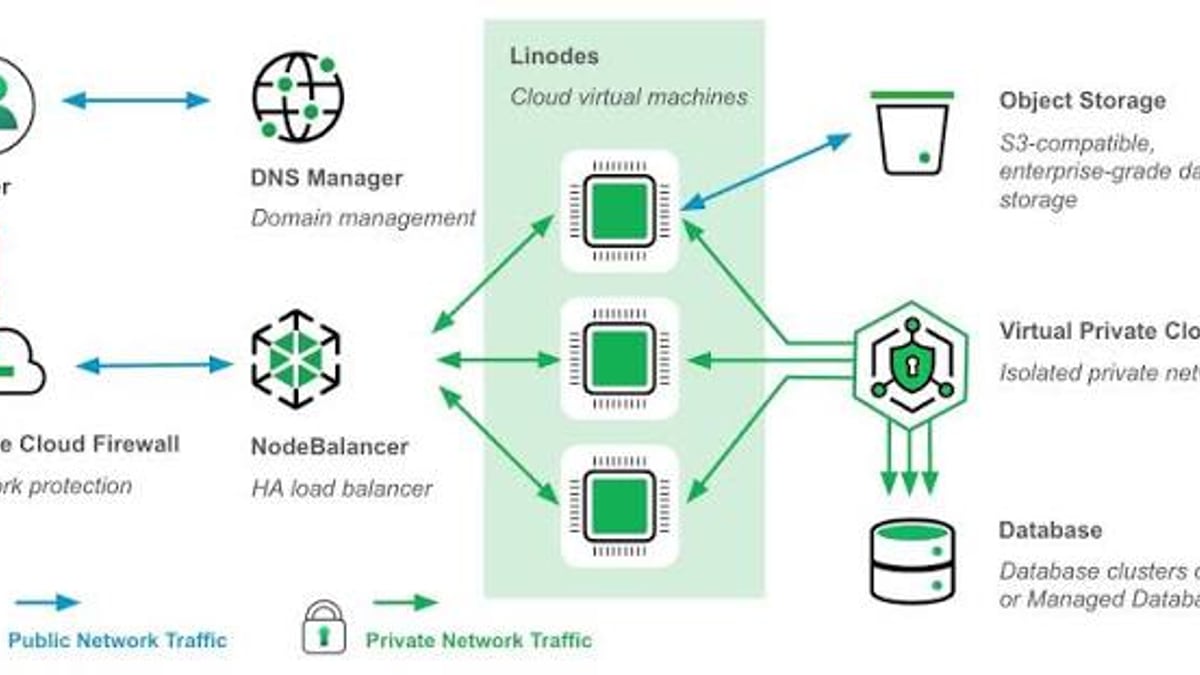
Akamai Cloud is the cloud computing division of Akamai Technologies, the company behind one of the largest content delivery and cybersecurity networks. If you remember Linode, Akamai Cloud is its evolution—retaining the same developer‑friendly simplicity but now deeply integrated with Akamai’s DDoS protection, bot management, and CDN fabric. The platform delivers compute (shared, dedicated, and GPU‑accelerated instances), block and object storage, managed databases, virtual private clouds, and a fully managed Kubernetes service. All of this runs across a growing set of data centers worldwide, with regions like Jakarta offering locally competitive pricing.
Rather than mimicking the hyperscale buffet, Akamai Cloud focuses on predictable performance and radical pricing transparency: no hidden fees, no egress overage surprises, and no proprietary lock‑in. It’s a deliberate alternative for teams that want cloud computing to be a reliable utility, not a negotiation.
Ideal Users and Top Use Cases
Akamai Cloud Review: Pricing, Performance, and Honest Verdict - supporting product research image 4.
Akamai Cloud isn’t trying to be everything for everyone, and that clarity is a strength.
Startups, SMBs, and lean teams that need cost control without sacrificing performance will feel at home. The straightforward monthly pricing—bandwidth included, not billed separately—eliminates the monthly spreadsheet anxiety that plagues many AWS or Azure bills.
AI/ML inference and lightweight training benefit from the platform’s GPU‑accelerated Linodes. While not as extensive as dedicated AI services from hyperscalers, the availability of NVIDIA GPUs at predictable price points makes it appealing for inference pipelines, patent intelligence, and small‑scale model work. Akamai’s acquisition of LayerX, an AI usage control platform, signals a deepening investment in secure, enterprise‑ready AI environments.
Latency‑sensitive web applications that already use (or could use) Akamai’s CDN and security stack are natural candidates. Running your compute inside the same edge network that delivers your static assets and mitigates bot traffic can shave off critical milliseconds.
Cross‑region, predictable workloads shine here. Take the client example of GoVeda, which reported a 30% performance boost and a 20% cost reduction after moving to Akamai Cloud—a real‑world proof point that the platform can deliver both speed and savings for throughput‑heavy applications.
Teams running continuous network checks or privacy audits also appreciate the model. At BrowserScan, we’ve seen clients move monitoring pipelines to Akamai Cloud to avoid egress shocks while keeping global coverage intact.
Key Strengths
Transparent, Predictable Pricing
This is the headline feature. Compute plans come with a fixed amount of outgoing bandwidth pooled across your account—no complex tiered egress rates. You know your bill in advance, whether you push 1 TB or 10 TB. This alone makes it a strong candidate for data‑heavy applications like streaming, backups, or web scraping.
Global Edge Reach with Localized Pricing
Akamai operates data centers across North America, Europe, Asia Pacific, and Latin America, with region‑specific pricing. For instance, the Jakarta data center is priced competitively for Southeast Asian users, showing a genuine commitment to global accessibility.
GPU‑Accelerated Compute
GPU instances deliver predictable, cost‑effective acceleration for AI inference, 3D rendering, and parallel workloads. Availability is expanding, and the pricing model continues the no‑surprise theme.
Deep Akamai Security & CDN Integration
Because Akamai Cloud sits inside the same infrastructure that powers Akamai’s global security network, any workload can be fronted by DDoS scrubbing, web application firewall rules, and bot management—often with a few clicks. This edge‑ready posture is hard to replicate with vanilla compute providers.
No Vendor Lock‑In
Akamai Cloud relies on open standards and standard disk images. Migrating in or out is straightforward, and there are no proprietary APIs that chain you to the platform. For organizations worried about the long‑term strategic risk of hyperscaler dependency, this is a meaningful differentiator.
Solid Reliability and Support
User experiences on platforms like Reddit highlight the simplicity and long‑term reliability of Akamai Cloud, with many decade‑plus customers still satisfied. For a candid community perspective, see the Akamai (Linode) review thread on Reddit. Enterprise adoption remains strong: a list of over 4,800 companies using Akamai compiled by TheirStack includes KPMG, IBM, and Visa, underscoring its suitability for demanding workloads.
Limitations and When to Look Elsewhere
No cloud is perfect, and Akamai Cloud’s focus means trade‑offs.
Smaller service catalog. You won’t find a managed AI/ML platform like SageMaker, a sprawling serverless ecosystem, or hundreds of cloud‑native services. If your architecture depends on a rich set of managed middleware, a hyperscaler may still be the pragmatic choice.
Advanced networking and hybrid features. While basic networking is solid, advanced features like intricate custom routing, ExpressRoute‑style private connectivity, or a deep multi‑region VPC peering model aren’t as mature. Large enterprises with complex on‑premises integrations may need more.
Port restrictions and email. By default, port 25 is blocked, as noted by multiple users. You can request to have it opened, but if you plan to run a mail server, be aware that this isn’t a turnkey feature.
GPU availability. GPU instances are available in selected data centers only; you may need to choose a region specifically for GPU access, which could affect latency for your users.
Documentation and community. While growing, the volume of tutorials, third‑party integrations, and community‑generated troubleshooting still trails the massive hyperscaler ecosystems. That said, the Linode heritage guarantees a loyal and knowledgeable community base.
Pricing Signals: How Much Does Akamai Cloud Cost?
Akamai Cloud Review: Pricing, Performance, and Honest Verdict - supporting product research image 2.
Akamai Cloud’s pricing is refreshingly linear. A shared Nanode instance starts around $5‑6 per month, while a 1 GB shared Linode runs about $12. Dedicated CPU plans scale predictably, and GPU instances are quoted with all‑inclusive bandwidth. Egress? The pooled allowance covers most needs, and overage costs are clearly listed—if you even hit them.
New users typically receive a generous trial credit (e.g., $100 for 60 days), making it easy to test performance without financial commitment. Price also varies by region; the Jakarta data center, for example, offers lower‑than‑average regional pricing to attract APAC workloads. For precise current numbers, always consult the official pricing page.
Getting Started and Setup
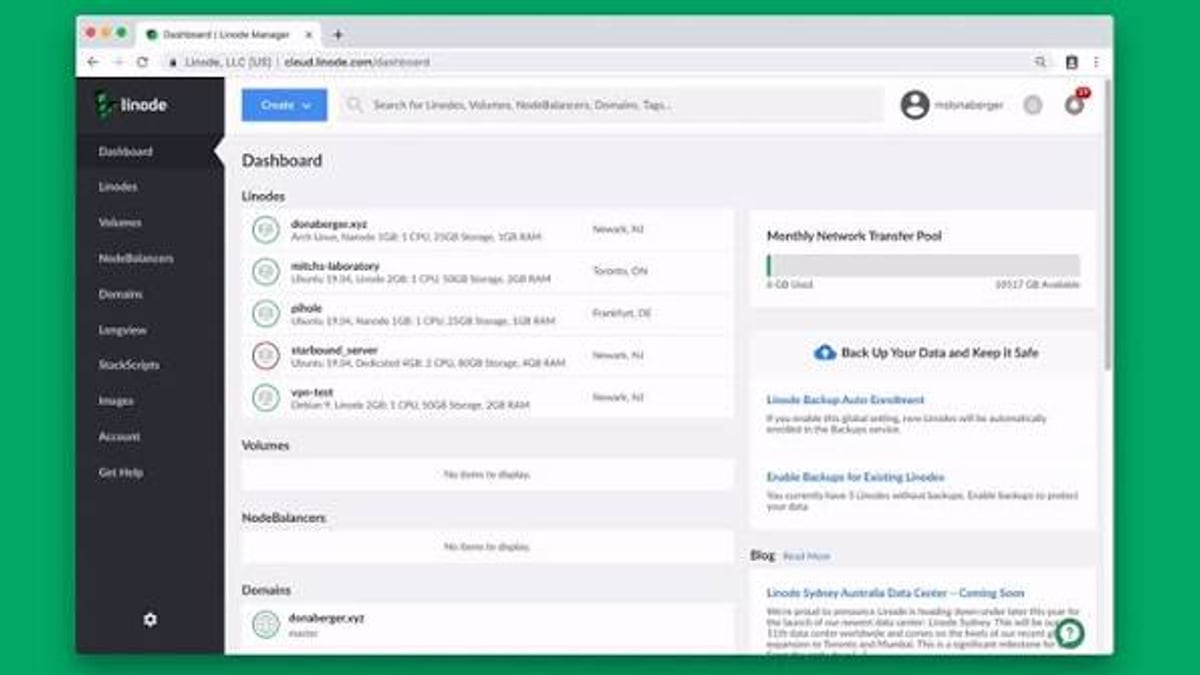
Spinning up your first instance takes minutes. Sign up, choose a data center based on your audience’s geography, and deploy from the library of Linux distributions, marketplace apps (WordPress, Docker, Kubernetes), or custom images. The cloud manager is clean and familiar to anyone who used Linode; API, CLI, and Terraform support are mature.
A smart practice before provisioning: measure real latency to candidate data centers. You can use any of the top internet speed test tools to get a snapshot of network conditions between your location and Akamai’s various regions. Once your instances are live, integrate them with one of the top internet performance measurement platforms to track latency, throughput, and uptime continuously—essential if you’re running a latency‑sensitive service that spans multiple global nodes.
Akamai Cloud vs Hyperscalers: When to Choose
Akamai Cloud Review: Pricing, Performance, and Honest Verdict - supporting product research image 3.
| Decision factor | Choose Akamai Cloud | Choose AWS / Azure / GCP |
|---|---|---|
| Egress cost sensitivity | Predictable, bundled bandwidth; rarely triggers bill shock | Complex, often the largest line item; can escalate quickly |
| Service breadth | Enough for compute, storage, Kubernetes, and databases | Hundreds of specialized services and AI/ML suites |
| Edge integration | Native CDN and security combination; true edge‑native deployment | Requires piecing together separate services |
| Lock‑in risk | Minimal—standard APIs, easy migration | High—proprietary services can create deep dependencies |
| Enterprise compliance | Covers common standards; check for specific HIPAA/PCI needs | Extensive certifications and compliance frameworks |
| Managing GPU workloads | Good for inference and moderate training; straightforward pricing | Full‑blown GPU clusters with advanced orchestration |
For many businesses, the sweet spot is using Akamai Cloud for predictable base workloads and edge‑delivered applications while keeping a hyperscaler for niche managed services that you genuinely need. That hybrid approach can yield the best of both worlds.
Related reading
- How to Use BrowserScan with Abstract API for Privacy Audits - Combine BrowserScan's leak and fingerprint tests with Abstract API's IP, email, and phone verification. Step-by-step workflow to detect leaks and enrich IP intelligence.
- BrowserScan vs Pixelscan vs NSLookup.io: Which Tool Wins? - Compare BrowserScan, Pixelscan, and NSLookup.io for privacy diagnostics, fingerprinting, DNS tools, and leak tests. Find the best tool for your workflow.
- BrowserScan vs NSLookup.io: Privacy Suite or DNS Tool? - Compare BrowserScan and NSLookup.io for online privacy vs DNS lookups. See why BrowserScan's fingerprint and leak detection beats a DNS-only utility.
Sources and further reading
- Cloudflare vs Akamai | Compare CDNs - When comparing Cloudflare vs Akamai, it is crucial to consider security, speed, and ease of use. Discover the difference between Cloudflare's CDN and Akamai.
Frequently Asked Questions
Is Akamai Cloud the same as Linode?
Akamai Cloud is the successor to Linode, now fully integrated under the Akamai brand. You still get the same developer‑friendly infrastructure, but with tighter Akamai security and CDN capabilities.
Does Akamai Cloud support managed Kubernetes?
Yes, Linode Kubernetes Engine (LKE) provides fully managed, production‑grade clusters. It’s one of the simplest ways to run Kubernetes without dealing with control plane overhead.
Can I run email servers on Akamai Cloud?
Port 25 is blocked by default to prevent spam. You can request removal of the block; otherwise, use an external email relay service.
How does DDoS protection work?
Every instance sits behind Akamai’s global scrubbing network, which can absorb large‑scale volumetric attacks. This protection is included and requires no configuration beyond what’s already set up.
Are GPU instances available in every region?
Not yet. Check the current availability map when selecting a data center. The footprint is growing steadily.
Is Akamai Cloud suitable for HIPAA or PCI workloads?
The platform supports encryption and security best practices, but you’ll need to review the latest compliance documentation to confirm that specific regulatory requirements are met for your use case.
Conclusion: Is Akamai Cloud Right for You?
Akamai Cloud makes a compelling case for anyone tired of opaque billing and vendor lock‑in. Its transparent pricing, built‑in high‑performance networking, and seamless CDN/security integration deliver real value—especially for startups, SMBs, AI inference workloads, and globally distributed web apps. The GPU‑accelerated instances and edge‑native posture point to a platform that is strategically expanding without losing its simple‑by‑design DNA.
If your roadmap doesn’t require the hyperscale service ecosystem, or if you want a predictable home for latency‑sensitive and data‑heavy projects, Akamai Cloud deserves a spot on your shortlist. Test it with a free credit, benchmark your key workloads, and compare the bill to your current setup; the savings and performance might surprise you.