
Account Burn Rate Reduction: Tactics to Extend Runway

Account Burn Rate Reduction: A Practical Guide to Extending Your Cash Runway
Account burn rate reduction is not about cutting every expense in sight. It is about understanding how fast your business consumes cash, identifying which costs actually drive revenue, and making deliberate changes that extend the time you have before the money runs out. Whether you are running a funded startup, a scaling SaaS business, or a mature company facing a slow quarter, the same core question applies: how long can you keep operating if income stays flat or drops?
This guide explains how to calculate gross and net burn, how to interpret your cash runway, and which reduction tactics produce the fastest results without damaging your core operations.
What Is Account Burn Rate?
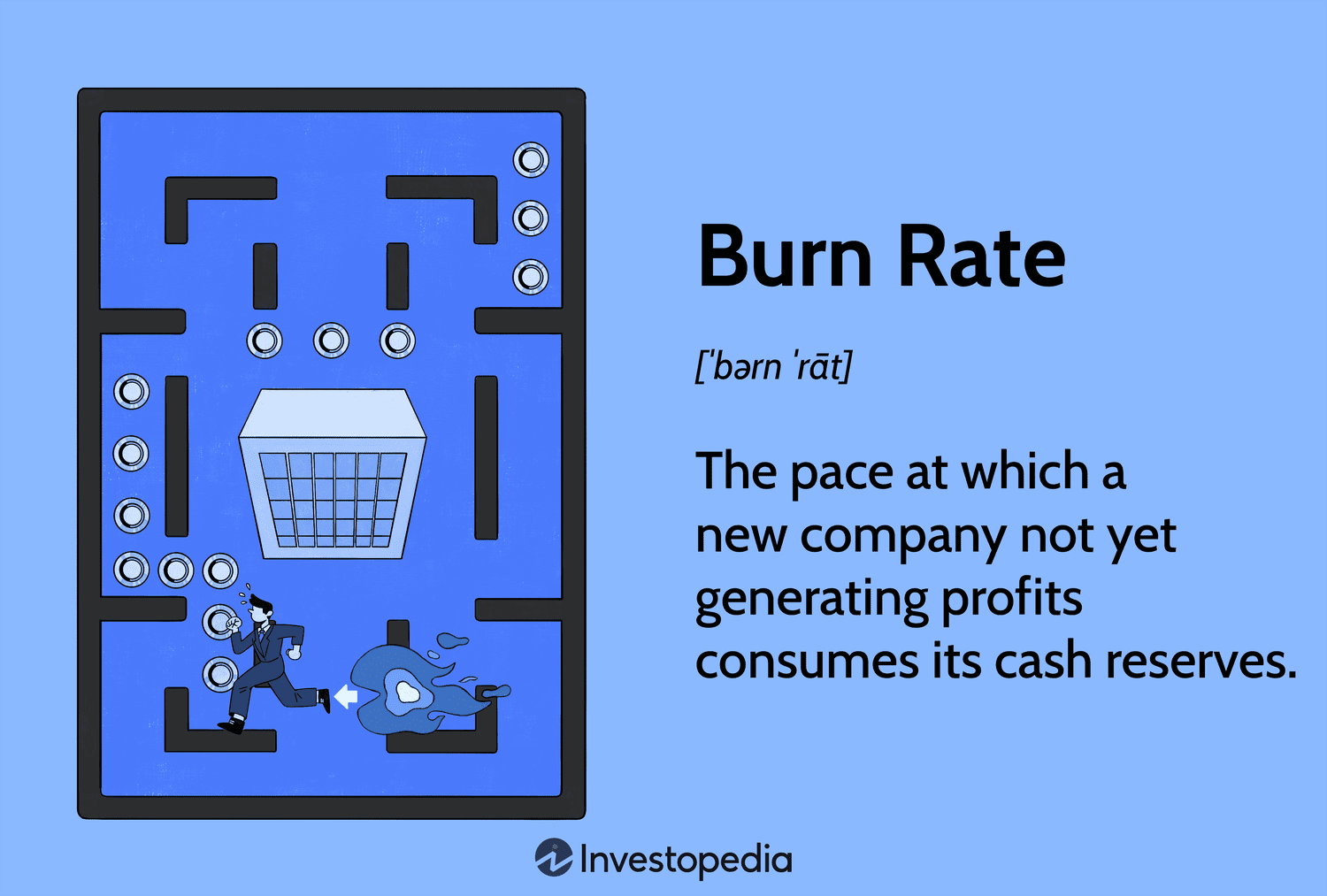
Account Burn Rate Reduction: Tactics to Extend Runway - What Is Account Burn Rate?.
Burn rate measures how quickly a company spends its cash reserves to cover operating costs. It is usually expressed as a monthly figure and is most relevant for businesses that are not yet profitable or that are investing heavily ahead of revenue.
There are two common versions:
- Gross burn rate: total monthly operating expenses, regardless of revenue.
- Net burn rate: the actual monthly cash loss after accounting for revenue and the direct cost of goods sold.
A company spending $80,000 per month on salaries, software, rent, and marketing has a gross burn of $80,000. If that same company generates $50,000 in monthly revenue, its net burn is $30,000. The difference matters because it changes how long the company can survive.
Why Burn Rate Reduction Matters

Account Burn Rate Reduction: Tactics to Extend Runway - Why Burn Rate Reduction Matters.
Cash flow problems are one of the most common reasons startups fail. A high burn rate does not automatically mean a company is in trouble, but it does mean the company has less time to correct course if revenue stalls, a customer churns, or a funding round falls through.
Reducing burn rate extends your cash runway: the number of months you can operate before cash reserves reach zero. The formula is simple:
Runway = Total Cash Reserves ÷ Net Burn Rate
For example, a company with $300,000 in the bank and a net burn of $30,000 per month has a 10-month runway. Reduce net burn to $20,000 per month, and the same reserves stretch to 15 months. That extra time can be the difference between negotiating a funding round from a position of strength and accepting unfavorable terms out of desperation.
How to Calculate Your Burn Rate

Account Burn Rate Reduction: Tactics to Extend Runway - How to Calculate Your Burn Rate.
Before you can reduce burn, you need an accurate baseline.
Gross Burn Formula
Gross Burn Rate = Total Monthly Operating Expenses
Include all recurring costs: payroll, contractor fees, software subscriptions, rent, utilities, marketing spend, legal and accounting fees, and any other overhead.
Net Burn Formula
Net Burn Rate = (Monthly Revenue - Cost of Goods Sold) - Gross Burn Rate
If the result is negative, that negative number is your net burn. If the result is positive, you are cash-flow positive and technically have no burn rate.
Cash Zero Date
A useful companion metric is your cash zero date: the exact date your reserves would run out at the current burn rate. Calculate it by dividing current cash reserves by monthly net burn, then counting forward from today. A company with $60,000 in reserves and a $20,000 monthly net burn has three months until cash zero. The smaller that number, the more urgent the need for reduction.
7 Account Burn Rate Reduction Tactics

Account Burn Rate Reduction: Tactics to Extend Runway - 7 Account Burn Rate Reduction Tactics.
Reduction strategies fall into three buckets: cutting costs, increasing cash inflows, and managing payment timing. The most effective plans combine all three.
1. Eliminate Non-Essential Spending
Start with the easiest wins. Audit every recurring subscription, software license, and service fee. Many companies carry unused seats, duplicate tools, or legacy services that no one actively uses. Cancel them immediately.
Next, review discretionary spending: travel, events, office perks, and ad hoc purchases. These costs rarely drive revenue directly and can often be paused for a quarter without visible damage.
2. Renegotiate Fixed Costs
Fixed costs are not as fixed as they appear. Rent, vendor contracts, and service agreements can often be renegotiated, especially if you have been a reliable customer.
- Ask landlords for temporary rent reductions, percentage rent tied to sales, or a shorter lease.
- Request volume discounts or longer payment terms from suppliers.
- Consolidate vendors to increase your negotiating leverage.
Even a 10% reduction across several large fixed costs can add months to your runway.
3. Adjust Staffing Without Losing Capability
Payroll is usually the largest expense. Before resorting to layoffs, consider alternatives that preserve your team while reducing cash outflow:
- Reduce hours instead of headcount.
- Move some roles to part-time or contract arrangements.
- Freeze non-essential hiring.
- Delay bonuses or shift a portion of compensation to performance-based incentives.
If layoffs are unavoidable, cut deep enough to avoid a second round. Repeated small layoffs destroy morale and productivity, which hurts revenue and can actually increase net burn.
4. Cut Products That Do Not Sell
Many companies maintain products or service lines for the sake of variety, even when they generate little revenue. Each underperforming product still consumes engineering time, support resources, marketing budget, and operational overhead.
Review your product portfolio and identify offerings with low revenue contribution and high maintenance cost. Temporarily or permanently retiring them can reduce burn while freeing resources for your core competencies.
5. Improve Collections and Payment Timing
Cash flow is not just about what you spend; it is also about when money arrives and leaves.
- Shorten customer payment terms or offer early payment discounts.
- Invoice promptly and follow up on overdue accounts consistently.
- Negotiate longer payment terms with suppliers, moving from 14 days to 30 or 45 days where possible.
- Switch loans to interest-only repayments for a short period if cash is tight.
These tactics do not reduce total costs, but they smooth cash flow and effectively extend your runway.
6. Build Alternate Revenue Streams
Increasing revenue lowers net burn just as effectively as cutting costs. Look for ways to monetize what you already have:
- Offer complementary services such as consulting, maintenance, or training.
- Create subscription tiers or bundles for existing products.
- Rent out underused equipment or license intellectual property.
- Enter adjacent markets or sell online to new geographies.
The goal is diversification: reducing dependence on a single revenue source makes your burn rate more resilient to customer churn or seasonal dips.
7. Monitor and Set Trigger Points
Burn rate reduction is not a one-time exercise. Market conditions, customer behavior, and expenses change constantly. Build a monthly review cadence:
- Track revenue, expenses, and cash reserves against your burn rate.
- Use forecasting tools to model best-case, worst-case, and likely scenarios.
- Set trigger points: if reserves fall below a certain threshold, pre-agreed cost cuts activate automatically.
- Meet regularly with your accountant or financial adviser to spot risks early.
Consistent monitoring lets you act before a small issue becomes a cash crisis.
Gross vs. Net Burn: Which Should You Track?
Both matter, but they answer different questions.
| Metric | What It Tells You | Use It For |
|---|---|---|
| Gross burn | Total monthly cash outflow | Identifying cost structure and efficiency |
| Net burn | Monthly cash loss after revenue | Calculating runway and funding needs |
A company with high gross burn but strong revenue may have a manageable net burn. A company with low gross burn but no revenue still has a net burn equal to its gross burn. Track both, but make net burn the primary metric for runway decisions.
What Is a Healthy Burn Rate?
There is no universal number. A healthy burn rate is one that is sustainable relative to your revenue, growth rate, and funding position.
As a general benchmark, many advisers recommend keeping at least three to six months of operating expenses in reserve. For early-stage startups, a 12-month runway is often considered safer, because it gives you time to raise the next round, pivot, or recover from an unexpected downturn.
A higher burn rate can be acceptable if growth is strong and investor interest is high. If growth stalls, the same burn rate becomes dangerous. The key is to reassess regularly and adjust before the runway gets short.
Common Mistakes to Avoid
- Cutting revenue-generating activities first: Marketing and sales often look like easy cuts, but reducing them can lower revenue and make net burn worse.
- Ignoring churn: Losing customers faster than you acquire them raises net burn even if expenses stay flat.
- Waiting too long to act: The best time to reduce burn is before you need to. Once cash reserves are critically low, your negotiating position weakens.
- Cutting too shallow: Small, repeated reductions create ongoing uncertainty. A single, decisive cut is usually healthier.
- Focusing only on costs: Revenue growth, payment timing, and collections are equally important levers.
How to Build a Burn Rate Reduction Plan
A structured plan is more effective than a list of disconnected cuts.
- Calculate your baseline: Determine gross burn, net burn, and cash zero date.
- Categorize expenses: Separate essential costs from discretionary ones.
- Rank reduction opportunities: Estimate the monthly savings and implementation time for each tactic.
- Set a target: Decide how many months of runway you need and work backward to the required net burn.
- Implement in phases: Start with fast, low-risk cuts, then move to structural changes.
- Monitor monthly: Track actual results against your plan and adjust as needed.
Related reading
- Virtual Browser Profiles: How They Work and When to Use Them - Learn what virtual browser profiles are, how they isolate browsing data, and when to use them for privacy, testing, and multi-account management.
- Pixelscan Setup: How to Test and Harden Your Browser - Learn how to set up Pixelscan for browser fingerprint, proxy, DNS, and WebRTC testing. Step-by-step workflow, result interpretation, and hardening tips.
- Browser Fingerprinting: How It Works and How to Test Yours - Learn how browser fingerprinting identifies you online, the main techniques used, privacy risks, and how to test your browser's fingerprint for free.
Sources and further reading
- Burn rate: What is it, why does it matter, and how to reduce It - Get a better understanding of burn rate and how to calculate and reduce it with this comprehensive guide for startups and small businesses.
- Understanding Burn Rate: Definition, Types, and Calculation Examples - Learn about burn rate, including its definition, types (gross and net), formulas, and real-life examples to evaluate a company's cash consumption rate.
- 5 Steps to Extend Your Business's Cash Burn - Discover 5 things you can do to buy more time with your business cash reserves.
Frequently Asked Questions
What is the difference between gross burn and net burn?
Gross burn is the total amount of cash a company spends each month on operating expenses. Net burn subtracts monthly revenue and the cost of goods sold from gross burn, showing the actual monthly cash loss.
How do I calculate my cash runway?
Divide your total cash reserves by your monthly net burn rate. For example, $200,000 in reserves divided by a $25,000 net burn gives you an 8-month runway.
What is a good burn rate for a startup?
There is no single answer, but a common guideline is to maintain at least three to six months of operating expenses in reserve. Early-stage startups often aim for 12 months or more of runway to allow time for fundraising and pivots.
Can I reduce burn rate without layoffs?
Yes. Start with non-essential spending, renegotiate fixed costs, adjust staffing hours instead of headcount, improve collections, and build alternate revenue streams. Layoffs should be a last resort after other levers have been exhausted.
How often should I review my burn rate?
Monthly. Regular review lets you spot negative trends early and act before cash reserves become critically low. Set trigger points so that predefined actions activate automatically when reserves fall below certain levels.
Does increasing revenue reduce burn rate?
Yes. Net burn is calculated after subtracting revenue, so any increase in revenue directly lowers net burn and extends runway, even if gross expenses stay the same.
Conclusion
Account burn rate reduction is fundamentally about buying time. Every dollar of monthly burn you eliminate adds runway, and every month of runway gives you more options: more time to grow revenue, more time to negotiate funding, and more time to make deliberate decisions instead of reactive ones.
Start with an accurate calculation of your gross and net burn. Then work through the reduction levers in order of speed and impact: eliminate waste, renegotiate fixed costs, adjust staffing thoughtfully, improve payment timing, and diversify revenue. Monitor the numbers monthly and set trigger points so you never find yourself surprised by a short runway.
Burn rate is not just a finance metric. It is a measure of how much control you have over your company's future. The lower and more predictable your burn, the more control you keep.