
Top 10 Online Vulnerability Scanning & Network Security Tools 2026
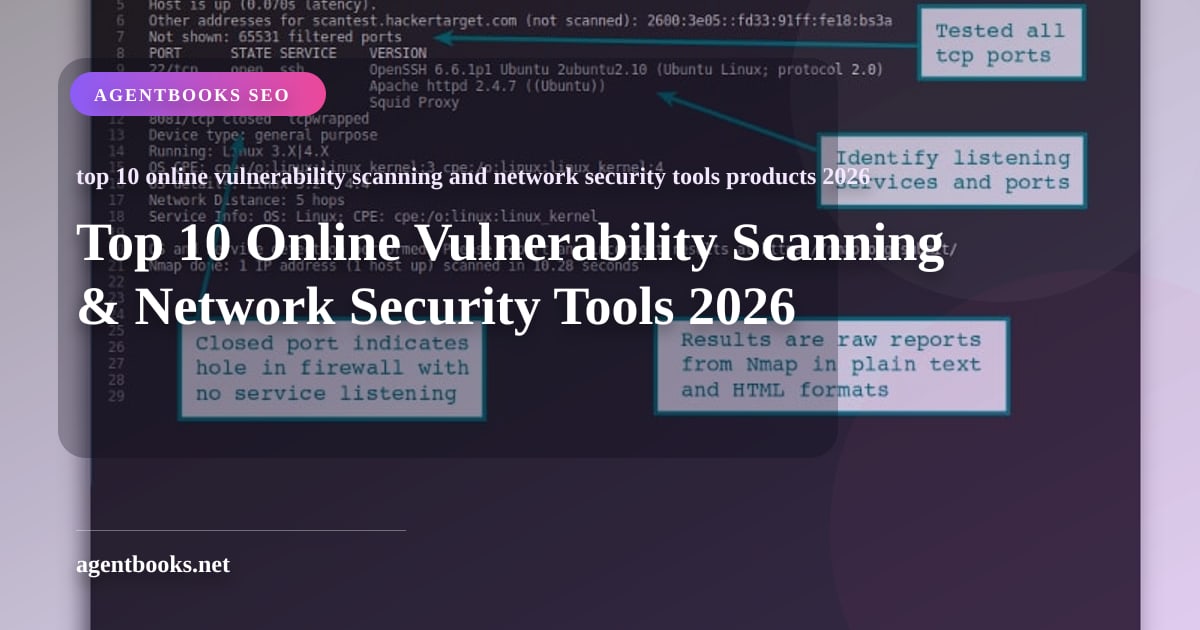
Top 10 Online Vulnerability Scanning & Network Security Tools in 2026
In a year when automated attack campaigns hit exposed services within minutes, the speed of your vulnerability discovery defines your security posture. Online vulnerability scanning tools—cloud‑based or web‑delivered—now let teams scan external assets, internal networks, and web applications without standing up on‑prem infrastructure. This 2026 Top 10 focuses exclusively on genuine online vulnerability scanning and network security products that you can access through a browser or an API, run continuously, and integrate into modern DevSecOps pipelines.
We evaluated each tool against the same transparent criteria: depth and breadth of vulnerability detection (network, web app, cloud, API), cloud accessibility, automation and scheduling, actionable reporting with severity ratings, compliance mapping, and integration with SIEM and ticketing systems. Tools that only operate as thick on‑prem clients or that fall primarily into privacy testing (such as browser fingerprint scanners) were excluded from the ranking, though we highlight a complementary privacy tool in a later section.
What We Looked For in an Online Vulnerability Scanner
Modern vulnerability scanning demands more than a port list. As SAFE’s vulnerability scanner overview and Red Canary’s breakdown of scanning tools both emphasise, a robust scanner must provide:
- Comprehensive coverage – networks, web applications, cloud configurations, and API endpoints.
- Credentialed and non‑credentialed scans – to find both surface misconfigurations and deep software flaws.
- Continuous, scheduled scanning – with real‑time dashboards that reflect the latest risk posture.
- Automation and integration – native connectors to Slack, Jira, SIEMs, and patch management tools.
- Actionable, prioritised reporting – severity scoring (CVSS, EPSS) and remediation guidance.
- Cloud‑native delivery – instant access, zero‑maintenance, and elastic scaling.
Every ranked tool meets the core promise of online vulnerability scanning. Some are pure‑play SaaS platforms; others offer a cloud management layer over a self‑hosted engine that you still interact with via a modern web UI.
The 10 Best Online Vulnerability Scanning & Network Security Tools of 2026

Top 10 Online Vulnerability Scanning & Network Security Tools 2026 product interface and feature overview.
1. Qualys VMDR (Vulnerability Management, Detection & Response)
Qualys VMDR delivers the industry’s most complete cloud‑based vulnerability management lifecycle. It combines asset discovery, unauthenticated and authenticated scanning, threat prioritisation, and remediation orchestration into a single platform that scales from mid‑market to global enterprises. Because Qualys runs entirely in the cloud, you can scan internet‑facing assets, internal networks, and multi‑cloud environments without managing scanners.
Key features: real‑time asset inventory, zero‑touch continuous scanning, TruRisk prioritisation that ties CVSS to business criticality, automated patch deployment, and granular compliance reporting for PCI DSS, HIPAA, and ISO 27001. Evidence: Qualys consistently sits atop analyst reviews for its sensor coverage and speed; the platform processes over 3 billion IP audits each year.
2. Tenable Vulnerability Management (with Nessus Expert)
Tenable’s online platform centres on the famous Nessus scanning engine, now available through a seamless web console. Tenable Vulnerability Management gives you a unified view of vulnerabilities across networks, cloud infrastructure, web apps, and even OT environments. The service delivers predictive prioritisation that forecasts which vulnerabilities are most likely to be exploited, based on Tenable’s own threat intelligence and machine learning.
Key features: pre‑built scan templates for every major OS and application, WAS (web app scanning) add‑on, cloud connectors for AWS, Azure, and GCP, and integration with ServiceNow, Splunk, and Jira. Evidence: Nessus is cited by Red Canary’s vulnerability scanner guide as “a staple for many security professionals conducting regular vulnerability assessments.”
3. Rapid7 InsightVM
Rapid7 InsightVM is a cloud‑delivered vulnerability management solution that focuses on real‑time visibility and dynamic risk scoring. Unlike products that rely on periodic static snapshots, InsightVM ingests live data from endpoints, cloud workloads, and container images, updating a risk dashboard that reflects the current exploitability of each asset.
Key features: live endpoint monitoring with lightweight Insight Agent, attack surface mapping, container scanning, and automated remediation workflows that prioritise vulnerabilities based on active threat campaigns. Evidence: Organisations using InsightVM report a 30% faster mean time to patch, driven by its actionable remediation projects.
4. Acunetix (by Invicti)
Acunetix has become the go‑to online scanner for web application and API security. Available as a fully managed cloud service, it detects SQL injection, XSS, broken authentication, and more than 7,000 web‑facing vulnerabilities, including misconfigurations in single‑page applications and complex JavaScript frameworks. Its DAST + IAST approach gives developers pinpoint remediation guidance.
Key features: automated scheduled scanning, integration with CI/CD tools (Jenkins, GitHub Actions, GitLab), advanced macro recording for authenticated scans, and built‑in vulnerability management with trend analysis. Evidence: independent benchmarks regularly show Acunetix’s low false‑positive rate, a critical factor for teams that embed security into fast DevOps cycles.
5. HackerTarget
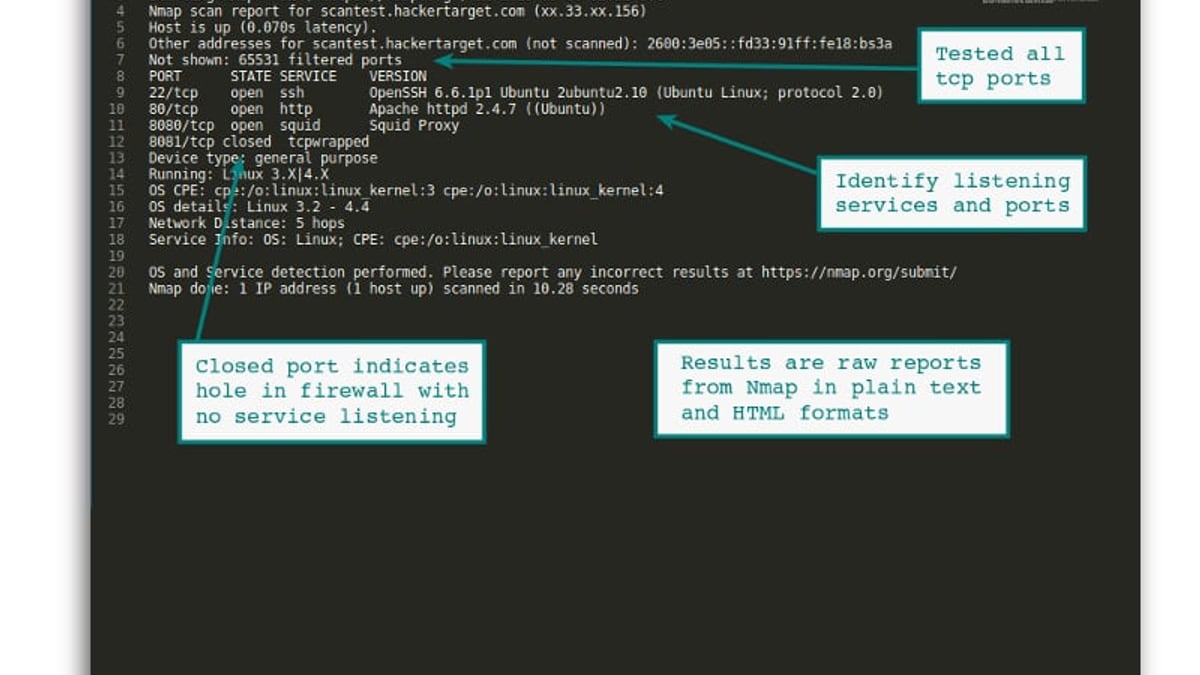
HackerTarget is a hosted platform that packages 28 online vulnerability scanners and network tools into a single, maintenance‑free service. Built on trusted open‑source engines like Nmap, OpenVAS (GVM), and Zmap, it lets systems administrators, network engineers, and IT service providers run deep, authenticated scans across the internet without installing or tuning back‑end components.
Key features: attack surface discovery, continuous scheduled scanning of 65,535 TCP ports, severity‑rated reports, and a library of over a decade of security tutorials and research. HackerTarget processed more than 1 million scans in the last year and is trusted by Fortune 100 companies and government agencies. Evidence: Because HackerTarget wraps community‑trusted tools in a hardened SaaS delivery, it fills the gap for teams that need enterprise‑grade results without stand‑alone scanner maintenance.
6. Intruder
Intruder is a cloud‑based vulnerability management platform that emphasises continuous external scanning. It automatically discovers your internet‑facing assets, scans them as soon as new issues are published, and sends concise reports with clear fix steps. Intruder’s emerging‑threat scanning engine integrates with AWS, Azure, and Google Cloud connectors to also check internal assets.
Key features: automated perimeter monitoring, smart scanning windows to avoid business disruption, compliance dashboards for ISO 27001 and SOC 2, and native integration with Slack, Jira, and PagerDuty. Evidence: Intruder has grown rapidly among SaaS companies because its pay‑per‑asset model makes advanced scanning accessible without enterprise licence fees.
7. Detectify
Detectify takes a unique crowd‑sourced approach to online vulnerability scanning. Its Surface Monitoring engine continuously probes external domains, IPs, and cloud assets using payloads sourced from a global community of ethical hackers. Alongside a standard web application scanner, Detectify delivers checks for zero‑day‑like vulnerabilities that often appear in the news weeks before commercial scanners add them.
Key features: extended attack surface monitoring, DAST surface scanning, and a focused “Deep Scan” option that performs authenticated checks. All findings are available through API, Slack, and Jira. Evidence: Because its modules are built by researchers who report real vulnerabilities, Detectify often catches high‑severity flaws in popular CMS and JavaScript libraries before traditional scanners.
8. Burp Suite Enterprise Edition (PortSwigger)
PortSwigger’s Burp Suite needs no introduction among penetration testers, and its Enterprise Edition brings that expertise to an online‑ready, scheduled scanning platform. You can manage hundreds of parallel scans through a web‑based dashboard, define scan policies, and integrate with CI/CD pipelines. It excels at uncovering complex logic flaws, OAuth misconfigurations, and server‑side request forgery.
Key features: HA deployment for horizontal scaling, automated recurring scans with manual penetration testing workflow integration, REST API, and rich reporting that maps findings to the OWASP Top 10. Evidence: Burp is the tool of choice for the OWASP testing guide and the defacto standard for web app pentesting teams, giving its automated scanner unmatched depth in custom application logic.
9. Probely
Probely positions itself as a developer‑first, API‑centric vulnerability scanner that is fully managed in the cloud. It targets modern web applications, REST and GraphQL APIs, and single‑page applications. Probely’s “security scan as part of the pipeline” philosophy lets you trigger scans from GitHub, GitLab, or Jenkins and review results directly in the developer’s environment.
Key features: JWT‑based authenticated scanning, Swagger/OpenAPI import, clear fix‑centred reports with code snippets, and a clean separation between security teams (who define scan policies) and developers (who run them). Evidence: Probely reduced the median time‑to‑fix for API vulnerabilities by 40% in customer surveys, thanks to its dev‑native workflow.
10. OpenVAS (Greenbone Community Edition + Cloud Options)
OpenVAS remains the most powerful open‑source vulnerability scanner, and in 2026 it’s accessible online through Greenbone’s Cloud‑ready appliances or community‑supported web interfaces. Scanning tens of thousands of network and web CVEs daily, OpenVAS offers the deepest free vulnerability feed available, making it a favourite for budget‑conscious organisations, educational institutions, and managed service providers that build their own hosted scanning services.
Key features: daily NVTs feed, network and web application scanning, authenticated Unix and Windows checks, and full integration with GVM management console. Evidence: Because it forms the engine behind many commercial and MSP‑delivered online scanners, OpenVAS’s presence on this list acknowledges its role as the open‑source backbone of the online vulnerability scanning ecosystem.
Comparison at a Glance

Top 10 Online Vulnerability Scanning & Network Security Tools 2026 product interface and feature overview.
| Tool | Primary Focus | Delivery | Pricing Model |
|---|---|---|---|
| Qualys VMDR | Full IT/cloud asset & vuln management | Cloud SaaS | Annual per‑asset |
| Tenable VM | Network, cloud, OT vulnerability mgmt | Cloud SaaS | Asset‑based subscription |
| Rapid7 InsightVM | Live vulnerability & risk analytics | Cloud SaaS | Per‑asset |
| Acunetix | Web application & API scanning | Cloud or on‑prem | Per‑URL |
| HackerTarget | Hosted open‑source scanner toolkit | Cloud SaaS | Fixed plans / pay‑per‑scan |
| Intruder | Perimeter & emerging‑threat scanning | Cloud SaaS | Per‑asset |
| Detectify | Crowd‑sourced external surface monitoring | Cloud SaaS | Per‑domain |
| Burp Suite Enterprise | Enterprise‑grade web app scanning | Self‑hosted web UI | Annual licence |
| Probely | Developer‑centric API/DAST scanning | Cloud SaaS | Per‑app |
| OpenVAS | Open‑source vulnerability assessment | Self‑hosted | Free (feed, appliance) |
Complement Your Scans with Browser‑Level Privacy Audits
Top 10 Online Vulnerability Scanning & Network Security Tools 2026 product interface and feature overview.
While the ten tools above secure your network and application layers, a complete security posture also considers endpoint privacy—especially when your team uses VPNs, cloud browsers, or remote access. Browser‑based leaks (WebRTC, DNS, IP fingerprinting) can undermine the very VPN you use to protect scan traffic.
BrowserScan serves as an adjacent, non‑ranked privacy tool that detects browser fingerprinting, WebRTC leaks, DNS leaks, and IP blacklisting—all from a no‑plugin web interface. When you combine BrowserScan’s privacy checks with a network vulnerability scan, you catch misconfigurations that pure network tools miss. For a step‑by‑step workflow on pairing BrowserScan’s leak tests with Nmap’s port scanning, see our guide: How to Use BrowserScan with Nmap for Network & Privacy Audits. For enhancing threat intelligence with IP data, also explore our comparison of top IP geolocation APIs.
Related reading
- BigDataCloud Review: Precise IP Geolocation APIs Tested - In-depth BigDataCloud review covering accuracy, pricing, GraphQL, free APIs, and how it stacks up for fraud detection, content localization, and network monitoring.
- IP-Lookup.net Review: Free IP Lookup, WHOIS & Risk Detection - Our IP-Lookup.net review covers the free IP intelligence tool's geolocation, ISP, WHOIS, VPN detection, API, and accuracy. See how it compares to alternative IP lookup tools.
- NordVPN Review 2026: Speed, Streaming, and Security Tested - In-depth NordVPN review with speed tests, streaming results, security audit, and pricing. See where it excels and where it falls short before you buy.
Sources and further reading
- Top 10 Cybersecurity Tools for 2026 - Explore the top 10 cybersecurity tools for 2026 and see how Scytale helps SaaS companies manage risks, enhance security, and stay compliant.
Frequently Asked Questions
Are online vulnerability scanners as thorough as on‑premise tools?
Yes, when configured correctly. Cloud‑based scanners use globally distributed sensor networks to test your external perimeter just like an attacker would. Many also deploy lightweight internal agents or connect to your cloud environments via API to perform authenticated internal scans, achieving depth equal to traditional on‑prem appliances.
Can I use free online scanners for production environments?
Free tools like OpenVAS or limited freemium tiers (e.g., HackerTarget’s free checks) are excellent for labs, education, and initial triage. For production, where SLAs, false‑positive minimisation, and compliance documentation matter, a paid online platform with support and regular feed updates is recommended.
How often should I run online vulnerability scans?
At minimum, scan external assets weekly and after any configuration change. For critical internet‑facing systems, daily or continuous scanning is now standard. The tools ranked above all support automated scheduling so you don’t have to remember to kick off a scan.
Do these tools replace penetration testing?
No. Vulnerability scanning identifies known weaknesses automatically; penetration testing uses human expertise to chain vulnerabilities and test business logic. The strongest programs use both: scheduled online scanning for ongoing hygiene and periodic manual pentests for deeper validation.
Which tool suits a small SaaS team with limited budget?
Intruder or HackerTarget provide predictable pricing and quick onboarding. If you have in‑house skills, building a hosted OpenVAS instance also gives a cost‑effective scanning engine. Pair any of these with a web application scanner like Probely for API coverage.
Keeping Your Network Secure in 2026 and Beyond
Top 10 Online Vulnerability Scanning & Network Security Tools 2026 product interface and feature overview.
Online vulnerability scanning has matured from a nice‑to‑have to the backbone of proactive network defence. Whether you need enterprise risk analytics from Qualys, developer‑friendly web scanning from Probely, or the transparent open‑source power of HackerTarget, the right tool shortens the time between exploit disclosure and your patch.
Document your scanning cadence and integrate findings into your broader compliance workflows. Platforms like BrowserScan help centralise your security evidence, making it simpler to maintain audit‑ready records as you move through continuous scans and remediation cycles.
Choose a scanner that matches your infrastructure, test it with a real Internet‑facing asset, and then automate. A single, well‑configured online scan today is worth more than a shelf full of un‑run vulnerability reports.