
What Is BigDataCloud? IP Geolocation & Network APIs Explained
What Is BigDataCloud? A Deep Dive into Precision IP Geolocation APIs
BigDataCloud is an independent, bootstrapped software company that provides a suite of location intelligence APIs. At its core, it helps developers and businesses translate raw internet data—like IP addresses and GPS coordinates—into actionable real-world context. Founded in Adelaide, Australia, and built on a patented geolocation engine, the platform moves beyond basic lookups to offer confidence scoring, network intelligence, and hazard detection. Whether you need to pinpoint a user's city or verify the integrity of a network connection, BigDataCloud packages complex data into a fast, developer-friendly API.
Why BigDataCloud Exists: Solving the Accuracy Problem
Before BigDataCloud was formally established in 2018, its founders—with backgrounds in network engineering and fraud prevention—kept running into the same wall. Existing IP geolocation services were often inaccurate, expensive, and treated location data as a generic commodity. A user on a mobile network might appear to be in a city hundreds of miles away, while a VPN user could slip through undetected. This frustration sparked a multi-year research project that led to a granted US patent (No. 11,792,110 B2) and a fundamentally different approach to mapping the internet.
Instead of relying solely on static databases, BigDataCloud continuously refines its algorithms against live network data. The result is a system that doesn't just return a city name; it provides a confidence level, a hazard report flagging potential VPNs or proxies, and detailed autonomous system information. This makes it a powerful tool for anyone who needs to make trust decisions based on a user's connection, from e-commerce platforms blocking fraudulent transactions to content providers enforcing regional licensing.
The Core API Packages: Four Pillars of Location Intelligence
BigDataCloud organizes its capabilities into four focused API packages, each with a generous free tier and no credit card required to start.
1. IP Geolocation: Know Where and Who
This is the flagship service. When you send an IPv4 or IPv6 address, the API returns over 50 data points. Beyond the standard country, city, and coordinates, you get:
- Confidence Area: A polygon showing the precise geographic area where the IP is likely located, not just a single point.
- Hazard Report: Flags indicating if the IP is a known VPN, proxy, Tor exit node, or part of a hosting provider's range.
- Network Intelligence: The ISP name, autonomous system number (ASN), and BGP prefixes associated with the IP.
This depth allows you to build nuanced logic. For example, a login from a residential ISP with a "high" confidence score in a user's home city is very different from a login from a data center ASN flagged as a proxy.
2. Reverse Geocoding: From Coordinates to Context
If your application already captures GPS coordinates from a mobile device or browser, the Reverse Geocoding API turns that latitude and longitude into a human-readable locality. Crucially, BigDataCloud resolves coordinates to administrative boundaries (city, suburb, postcode) rather than street addresses. This design choice means consistent, fast results globally, even in rural or sparsely mapped regions where street-level data is unreliable. It also supports over 100 languages, making it ideal for internationalized applications.
3. Phone & Email Verification
Validation extends beyond location. The platform includes APIs to verify the existence and format of phone numbers and email addresses, adding another layer of trust assessment to your sign-up or checkout flows.
4. Network Engineering
For deep network diagnostics, this package provides programmatic access to ASN data, BGP routing information, and IP prefix lookups. It is a resource for network administrators and security researchers who need to map the infrastructure behind an IP address.
Developer Experience: REST, GraphQL, and AI Integration
BigDataCloud is built for speed and flexibility. The APIs are accessible via both REST and GraphQL. While a standard REST call returns a full JSON object of about 2 KB, the GraphQL interface lets you request only the fields you need, potentially slashing the response to a few hundred bytes. This is a unique offering in the IP geolocation space and is critical for mobile apps or high-volume services where every byte of bandwidth counts.
Official SDKs are available for major programming languages, and the platform integrates directly with AI coding assistants. Using an MCP (Model Context Protocol) server, you can connect BigDataCloud to tools like Claude or VS Code, allowing your AI assistant to geolocate IPs and validate data directly within your development environment.
Practical Applications and Privacy Considerations
What Is BigDataCloud? IP Geolocation & Network APIs Explained - Practical Applications and Privacy Considerations.
The APIs serve a wide range of industries. Logistics platforms use reverse geocoding with timezone data to schedule deliveries accurately. Ad tech companies use IP geolocation for campaign targeting. Cybersecurity teams rely on the hazard report to identify malicious traffic. However, any tool that reveals location and network data also raises privacy questions. BigDataCloud is privacy-friendly by design in its reverse geocoding, deliberately avoiding street-level identification.
For individuals, understanding what these APIs expose is a critical step in taking control of your own digital footprint. Every website you visit has access to your IP address and can use a service like this to infer your approximate city and ISP. To see exactly what information your browser is leaking, you can run a comprehensive check using a privacy testing platform. BrowserScan offers a suite of free, web-based tools that complement this knowledge. After learning what BigDataCloud can detect, you can use BrowserScan's IP address lookup to see your own geolocation, ISP, and proxy status, or run its DNS and WebRTC leak tests to verify that your VPN is not accidentally exposing your real IP to such geolocation services.
BigDataCloud vs. Google Maps: A Cost and Use-Case Comparison
A common question is how BigDataCloud compares to Google Maps for location data. The short answer is that they solve different problems. Google Maps excels at street-level geocoding and rich map visualization. BigDataCloud focuses on locality-level resolution with a developer-first, privacy-conscious model.
The cost difference is stark at scale. For 5 million monthly reverse geocoding requests, Google Maps can cost over $27,000, while BigDataCloud's Silver plan costs $169 per month. Furthermore, BigDataCloud places no restrictions on permanently storing the geocoding results, a significant advantage over Google's terms of service for many business models.
Verifying Your Own Exposure with BrowserScan
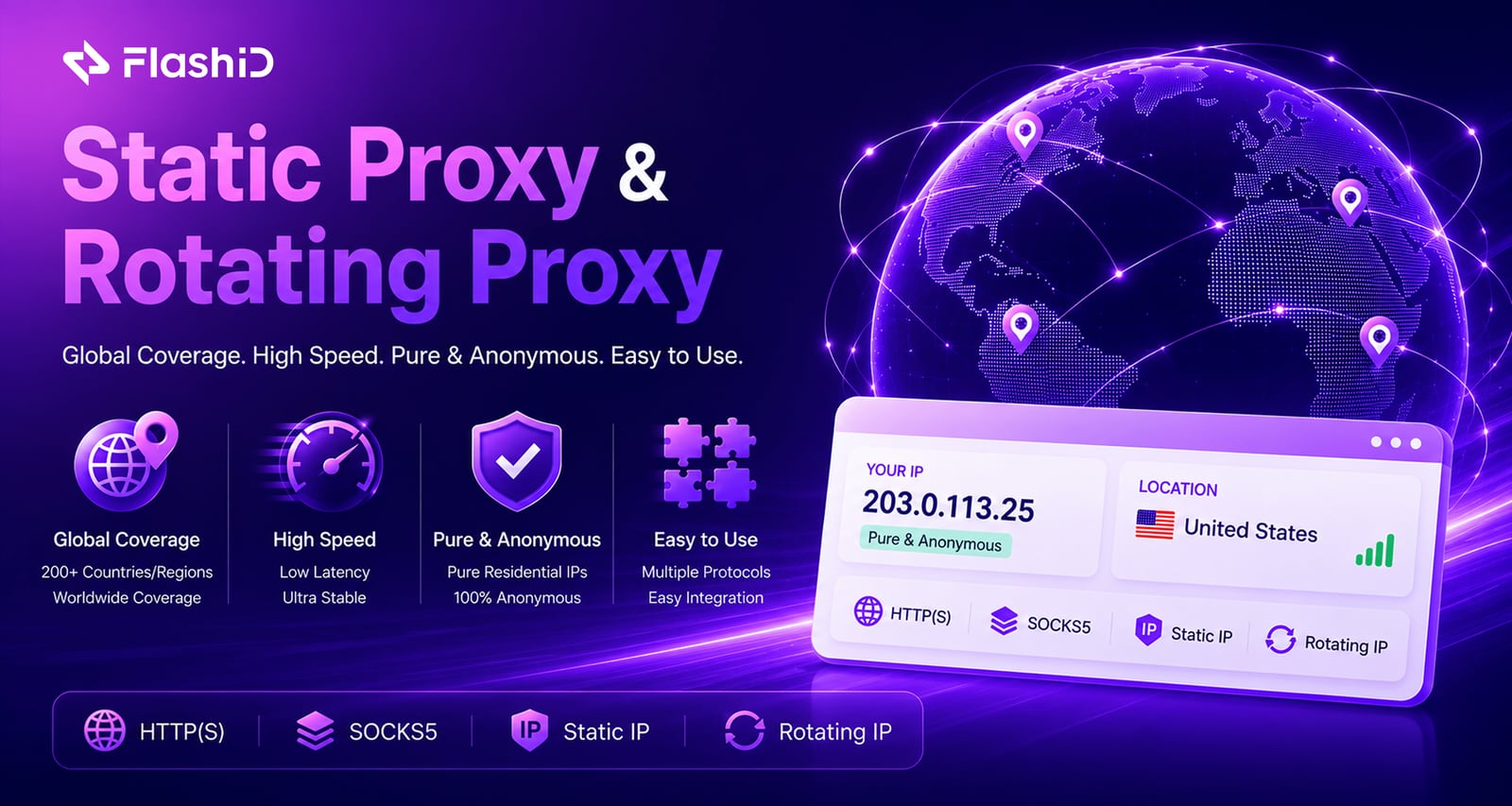
BrowserScan product interface.
Understanding BigDataCloud's capabilities gives you a blueprint for what the internet knows about your connection. To translate that knowledge into personal privacy action, you need to audit your own setup. This is where a dedicated privacy testing tool becomes invaluable.
BrowserScan is a comprehensive online platform designed for exactly this purpose. It provides a practical way to interact with the same types of data points that APIs like BigDataCloud analyze, but from the user's perspective. For instance, after learning about ASN intelligence, you can use an ASN Lookup to understand who owns your IP block and how your traffic is routed. If you are concerned about the hazard report flagging VPNs, BrowserScan's browser fingerprint analysis can verify if your anti-fingerprinting measures are working effectively, a topic explored in our guide on what anti-fingerprinting is. By cross-referencing the data a service like BigDataCloud would receive with the results from BrowserScan's tests, you can identify and close leaks in your privacy armor.
Related reading
- What Is Encryption? Types, Algorithms & How It Protects Your Data - Learn how encryption secures data using symmetric and asymmetric algorithms like AES and RSA. Discover its role in HTTPS, privacy, and how to test your protection.
- Pixelscan Login: How to Access & Use Your Privacy Scans - Learn how Pixelscan login works, why there is no traditional account, and how to save, interpret, and share your browser fingerprint and IP leak scan results securely.
- What Is an IP API? A Complete Guide to IP Geolocation Services - Learn how IP APIs work, compare free and paid geolocation services, and discover how to verify your IP data accuracy with privacy tools.
Sources and further reading
- BigDataCloud - Precise IP Geolocation & Reverse Geocoding APIs - Patented IP geolocation with daily public accuracy benchmarks. Confidence areas, hazard detection, ASN intelligence. Free to start.
- About BigDataCloud | BigDataCloud - BigDataCloud is an independent, bootstrapped software company built in Adelaide, Australia. We build IP geolocation and location APIs used by developers worldwide.
- BigDataCloud - Precise IP Geolocation & Reverse Geocoding APIs - Resolve GPS coordinates to city, locality, postcode and region in over 100 languages. Sub-millisecond response. No street addresses, by design. Free to start.
Frequently Asked Questions
Is BigDataCloud free to use?
Yes, every API package includes a free forever tier that allows between 10,000 and 50,000 calls per month without a credit card. Paid plans scale up from there.
What makes BigDataCloud's IP geolocation more accurate?
It uses a patented, continuously refined algorithm that analyzes live network data and provides a confidence area rather than a single point. This, combined with daily public accuracy benchmarks, offers a transparent measure of reliability.
Does BigDataCloud return street addresses?
No, by design. Its reverse geocoding resolves coordinates to administrative boundaries like city, suburb, and postcode. This is faster, more consistent globally, and more privacy-friendly.
Can I use BigDataCloud to detect VPN users?
Yes. The IP Geolocation API includes a hazard report that flags IPs associated with VPNs, proxies, Tor exit nodes, and hosting providers, helping you assess the risk of a connection.
How can I check what information my own IP address reveals?
You can use a free online tool like BrowserScan. It performs an IP address lookup showing your geolocation and ISP, and includes leak tests to ensure your VPN or proxy is working correctly.
Conclusion
BigDataCloud has carved out a distinct niche by treating IP geolocation not as a commodity, but as a precision science. Its patented technology, transparent accuracy benchmarks, and developer-centric features like GraphQL support make it a compelling choice for businesses that need reliable location intelligence at scale. For the privacy-conscious user, understanding the depth of data available through such APIs is a powerful motivator to audit your own digital exposure. By combining knowledge of how these systems work with active testing through platforms like BrowserScan, you can navigate the web with a clearer picture of what you reveal and how to protect it.